Is your KYC data deleted when you close the account?
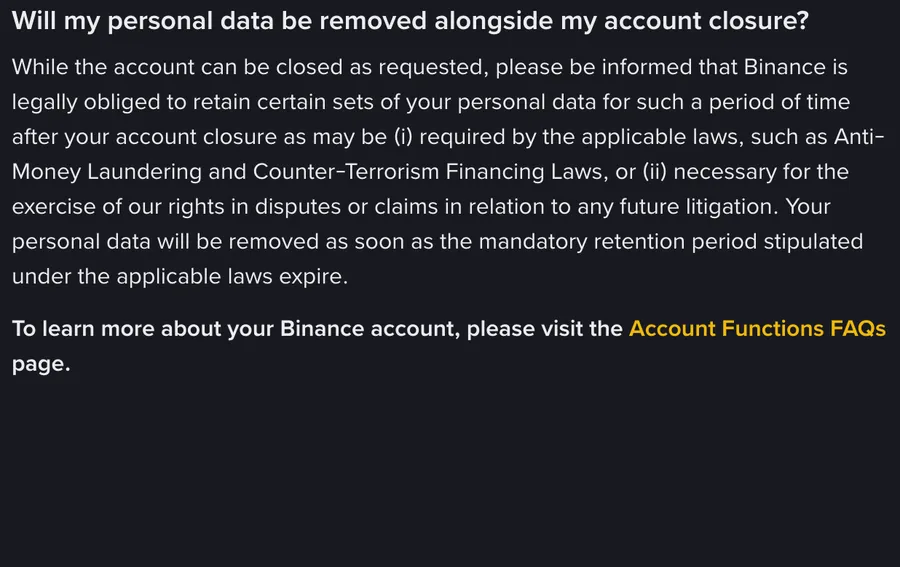
Mostly no. Once KYC documents are submitted, exchanges retain them for years — in the US, at least 5 years to comply with the Bank Secrecy Act, with state money-transmitter regulations adding their own rules. You can request deletion under data-protection laws (CCPA in California, GDPR if you're an EU resident), but compliance retention requirements usually trump these. Assume KYC data submitted is data submitted permanently.
The retention rules
US-regulated exchanges are required by FinCEN's MSB rules to retain customer identification documents for 5 years after account closure. The Patriot Act's customer identification program (CIP) requires similar retention. State money-transmitter licenses (which Coinbase, Kraken, Gemini, Binance.US all hold) layer additional requirements — California, New York, Texas all have multi-year retention rules.
So when you submit your driver's license to Coinbase, the file is retained for 5+ years even if you close the account and request deletion. The data subject access request you might file under CCPA results in "we have your data, here it is in machine-readable form, but we cannot delete it due to FinCEN retention requirements."
What you can actually do
Three partial actions:
Account closure. Most exchanges let you close the account, after which deposits/withdrawals stop. The KYC data is retained but no further account activity occurs. Useful if you want to "go cold" from a specific exchange.
Withdrawal of consent for marketing. You can opt out of marketing emails, third-party data sharing for advertising, and similar uses. This doesn't affect the underlying compliance data retention.
Data export. Both CCPA and Coinbase's customer-facing tools allow you to download your KYC and transaction data. Useful for tax filing and for understanding what the exchange has on you.
The pseudonymous alternative
For a US holder concerned about KYC retention, the practical alternative is self-custody — buy crypto via P2P or KYC-free atomic swaps (Bisq, etc.), then move to a self-custody wallet. Even this isn't truly KYC-free because the on-ramp dollar source (your bank) is itself KYC'd, and chain-analytics firms still link your wallet to your identity through deposit history.
Full unlinkability from KYC requires either never using a regulated venue (impractical for most holders) or accepting that "KYC submitted = identifiable forever" as a baseline.