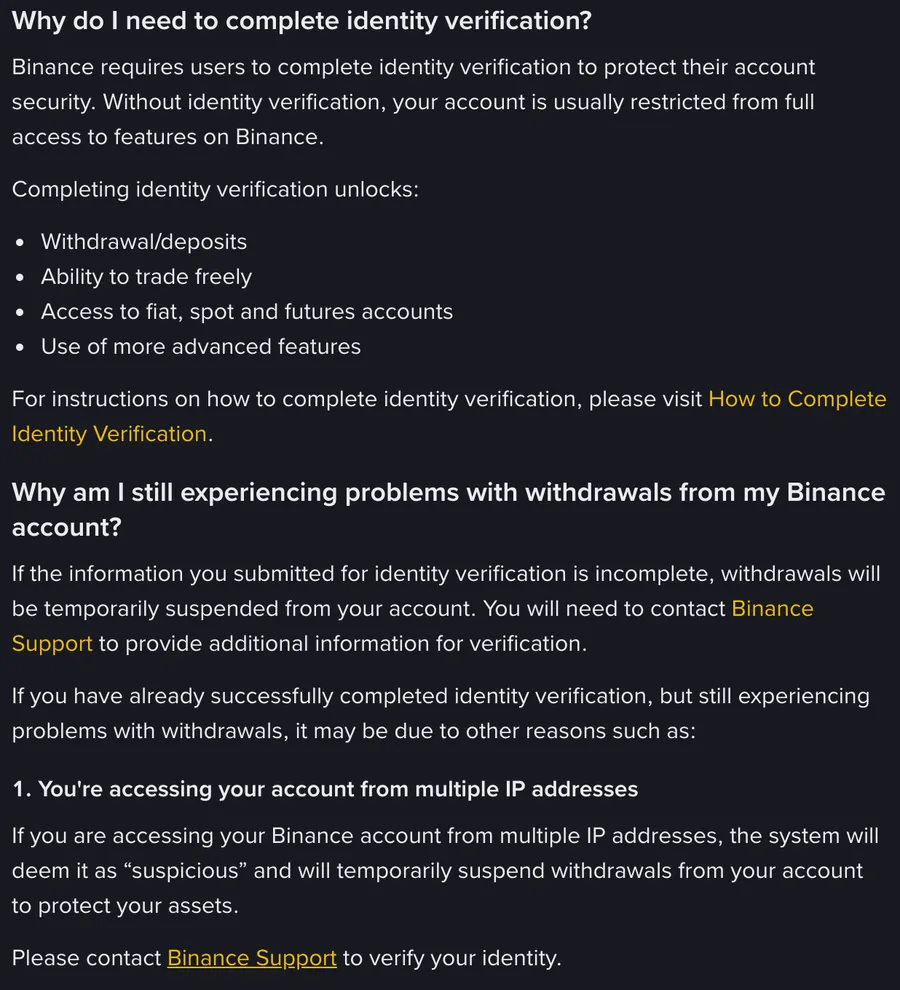
KYC — Know Your Customer — is the identity-verification process every US-regulated crypto platform runs before letting you deposit, withdraw, or trade. Driver's license, selfie, sometimes proof of address, sometimes source-of-funds documentation. Coinbase, Kraken, Gemini, Binance.US, Robinhood — all require it. Required by the Bank Secrecy Act (BSA, 1970) as extended to crypto businesses by FinCEN's 2013 guidance.
What KYC actually means for a US holder
Three operational consequences:
First, your name, address, and trading history at the platform are linked to your real-world identity. The IRS receives 1099-B and 1099-MISC forms from US-regulated CEXes, and from the 2025 tax year brokers also report digital-asset sales on Form 1099-DA; the FBI and Treasury can subpoena historical records.
Second, withdrawals to non-KYC destinations may be flagged, slowed, or refused. Coinbase's "Travel Rule" implementation requires that on certain large withdrawals you confirm the destination's owner identity. This is FinCEN compliance, not Coinbase being difficult.
Third, your KYC data is at risk separately from your funds. In May 2025, Coinbase disclosed a breach of customer data, which shows the risk plainly. KYC turns the exchange into a custodian of identity data, not just funds.
What KYC catches
KYC is designed to catch money laundering, terrorist financing, and sanctioned-party transactions. It does this imperfectly — sophisticated bad actors use stolen identities, layered shell companies, and jurisdictional arbitrage — but well enough that platforms can demonstrate good-faith compliance and avoid FinCEN enforcement actions.
For ordinary US-resident holders, KYC is mostly a friction tax that produces tax records the IRS will eventually see. It is not designed to protect you; it is designed to protect the platform's regulatory position.
The KYC-free alternative
Truly KYC-free fiat on-ramps to crypto have largely disappeared in the US since 2022. The remaining options — P2P platforms like LocalBitcoins (now defunct), Bisq (decentralized P2P), and small-volume cash-by-mail services — are mostly used by holders who have specific privacy needs (whistleblowers, journalists, people in custody disputes) rather than mainstream users.
On-chain activity itself is KYC-free: once you have crypto in a self-custodied wallet, swapping on a DEX, providing liquidity, or staking does not require KYC. The KYC gate is only at the fiat boundary.
The travel-rule wrinkle
FinCEN's Travel Rule (technically applicable to crypto since the 2019 FATF revision) requires US-regulated platforms to share originator and beneficiary information for transactions above $3,000. In practice, a large withdrawal to a self-custody wallet may trigger extra verification; what you'll be asked for depends on the platform's prompts.
For US holders moving substantial sums off-exchange, plan the move: notify the exchange in advance if possible, keep records of the destination wallet's ownership, and leave time in case the first large transfer to a new address is held for review.
Further reading: AML, CEX, Withdrawal whitelist.